
| Scientific name | Ficus benghalensis |
|---|---|
| Common name | Indian banyan |
| Family | Moraceae |
| Native range | Indian subcontinent |
| Leaf character | Broad, leathery, oval to elliptic; conspicuous veins |
What should you look for?
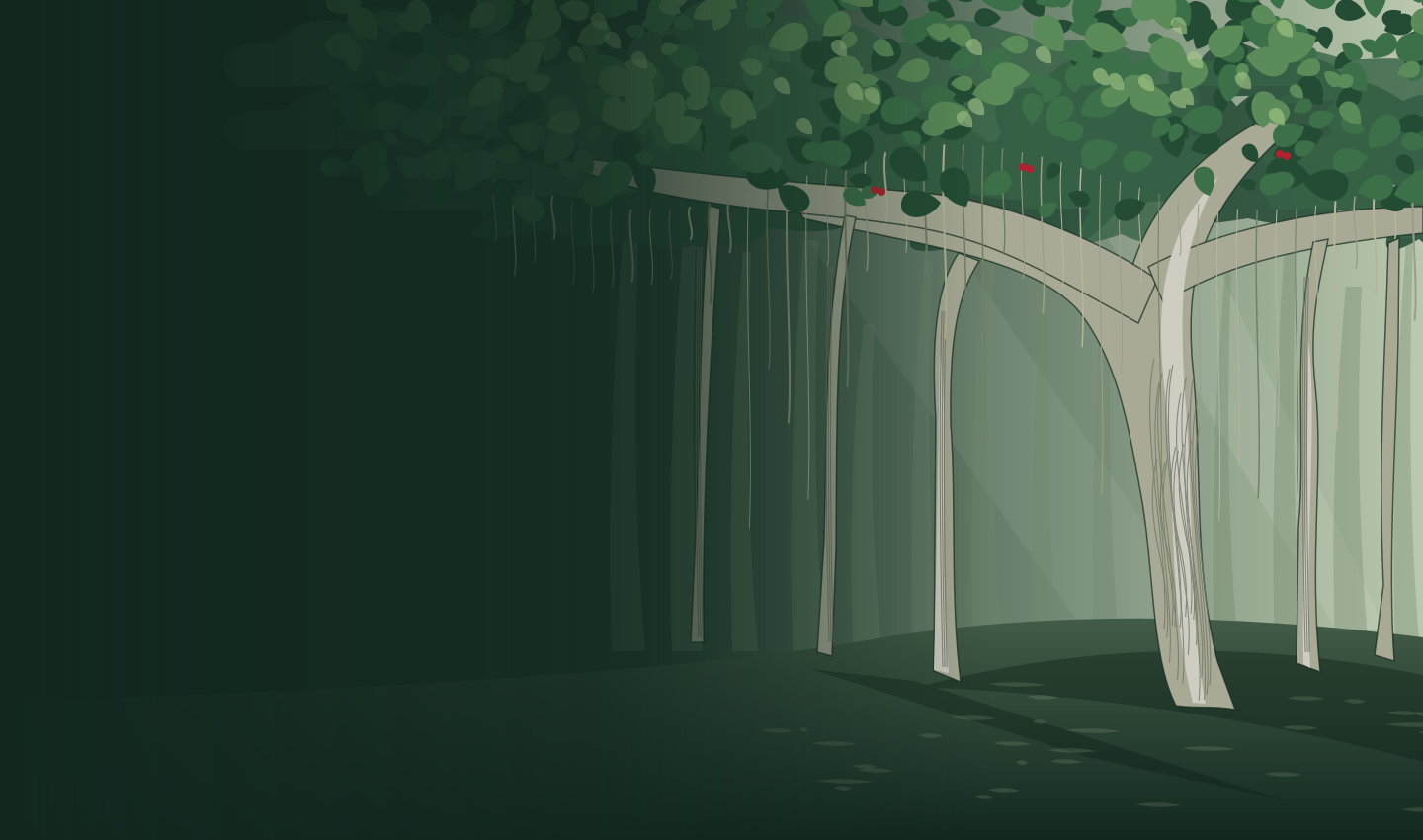
Look at the leaves, their veins and texture, the position of paired figs, and the root architecture together. Ripe figs are red to orange. A lack of aerial roots on a young plant does not rule the species out.
How does it fit the banyan story?
The Great Banyan, Thimmamma Marrimanu and several well-known Hawaiian and Florida plantings are identified as this species. Its root system makes placement consequential: the room an outdoor banyan eventually needs is part of the plant choice, not a detail to settle later.
Before you name or plant it
Use several characters together and keep the location in the record. Young plants, cultivated forms and mature trees can look different. Our identification key narrows the possibilities; it does not replace a regional flora or a qualified identification. For planting decisions, check local invasive status and available root space.
Notable trees
Compare the relatives
Sources
- Ficus benghalensisNational Parks Board, Singapore · Accessed 2026-11-24
- Ficus benghalensis: banyanRoyal Horticultural Society · Accessed 2026-11-24
- Ficus benghalensis: species overviewUniversity of Florida / IFAS · 2026 · Accessed 2026-11-24