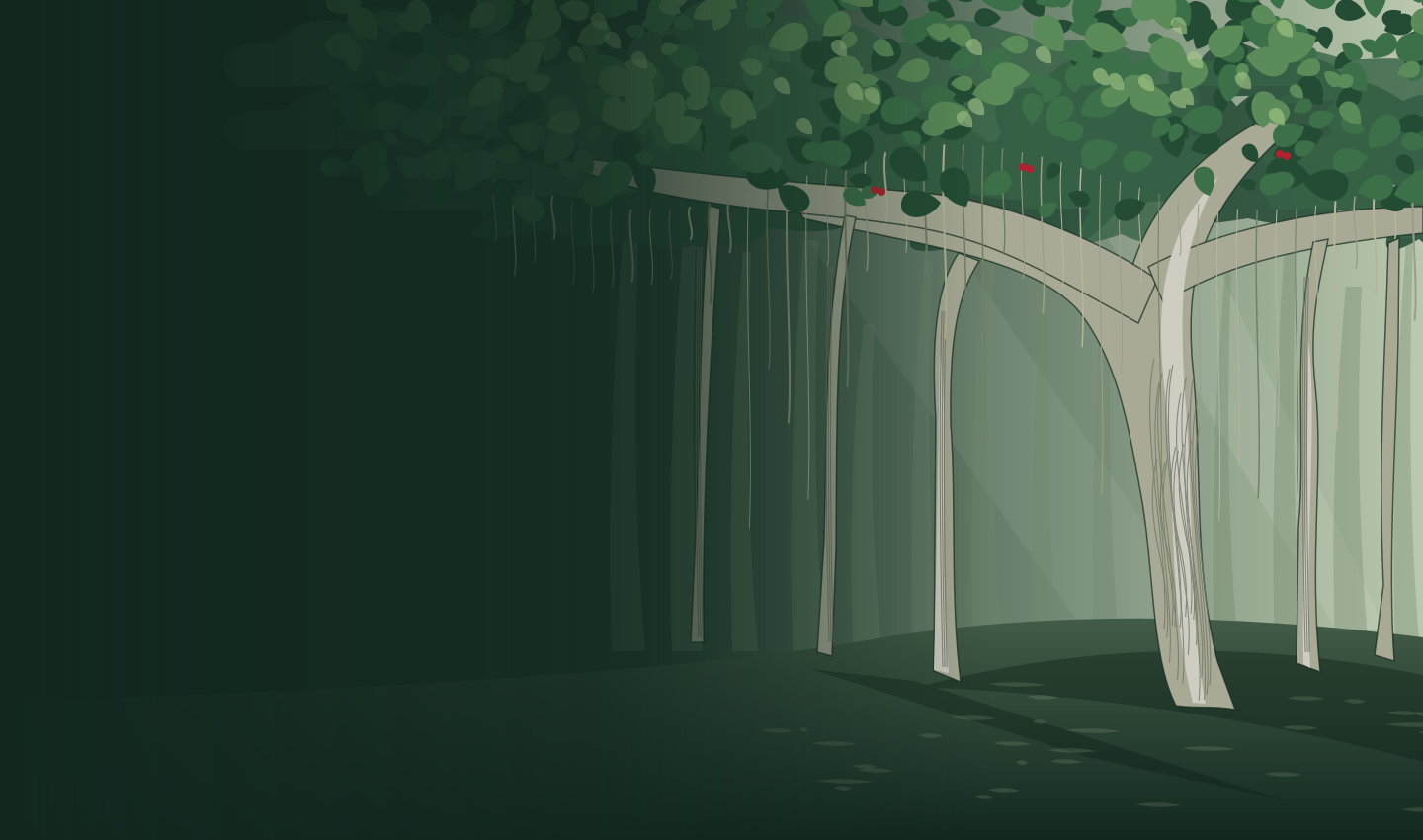
| Indian banyan | An introduced tree in Hawaiʻi |
|---|---|
| Bishop Museum record | Ficus benghalensis recorded in cultivation |
| Lahaina | A living landmark recovering from the 2023 fire |
| Visitor priority | Respect current closures and local guidance |
How can an introduced tree become a landmark?
A tree can become part of daily routes, memories and public gathering over generations. Its cultural place then includes the people who planted, maintained and used it. Introduced origin does not erase those connections, and those connections do not change its botanical origin.
The culture guide distinguishes these questions throughout the site. When reading an account of a Hawaiian banyan, look for a named species and a documented planting history rather than assuming every large tropical fig is an ancient native tree.
What does the botanical record tell us?
Bishop Museum’s Plants of Hawaiʻi record identifies Ficus benghalensis and describes it as found in cultivation. Its specimen records provide a different kind of evidence from a travel description: they connect botanical identity with recorded collections and locations.
Other figs have different histories of introduction and naturalisation. The word “banyan” alone is too broad for an invasive-status claim. Use the regional status guide and the relevant species record when ecological questions arise.
How should Lahaina’s tree be understood now?
Lahaina’s banyan was damaged during the August 2023 wildfire and remains a focus of recovery. It should be discussed alongside the community’s recovery, not simply as a visitor attraction or a visual symbol detached from the surrounding loss.
Akakū’s record of the September 2026 Maui Arborist Committee meeting describes continued closure and support work. Access can change, so consult the dated Lahaina tree profile and local authorities before planning a visit. A photograph showing new foliage is not by itself proof that unrestricted access is appropriate.
What makes a useful visit or historical account?
Start with the site’s own history, follow signs and barriers, and avoid climbing, carving or removing plant material. At recovering sites, the best way to value a tree may be to give it and its caretakers space.
Compare a tree’s stated age with the recorded planting date where one exists, and distinguish park area from canopy area. The Hawaiʻi atlas listing brings the relevant profiles together. Each record keeps measurements, historic context and current visitor information separate so that one does not silently stand in for another.
Sources
- Ficus benghalensis: Plants of HawaiʻiBishop Museum · Accessed 2026-11-24
- Lahaina banyan tree recovery: Arborist Committee meeting recordAkakū Community Media · Accessed 2026-11-24
- Lahaina recovery effortsLahaina Restoration Foundation · Accessed 2026-11-24