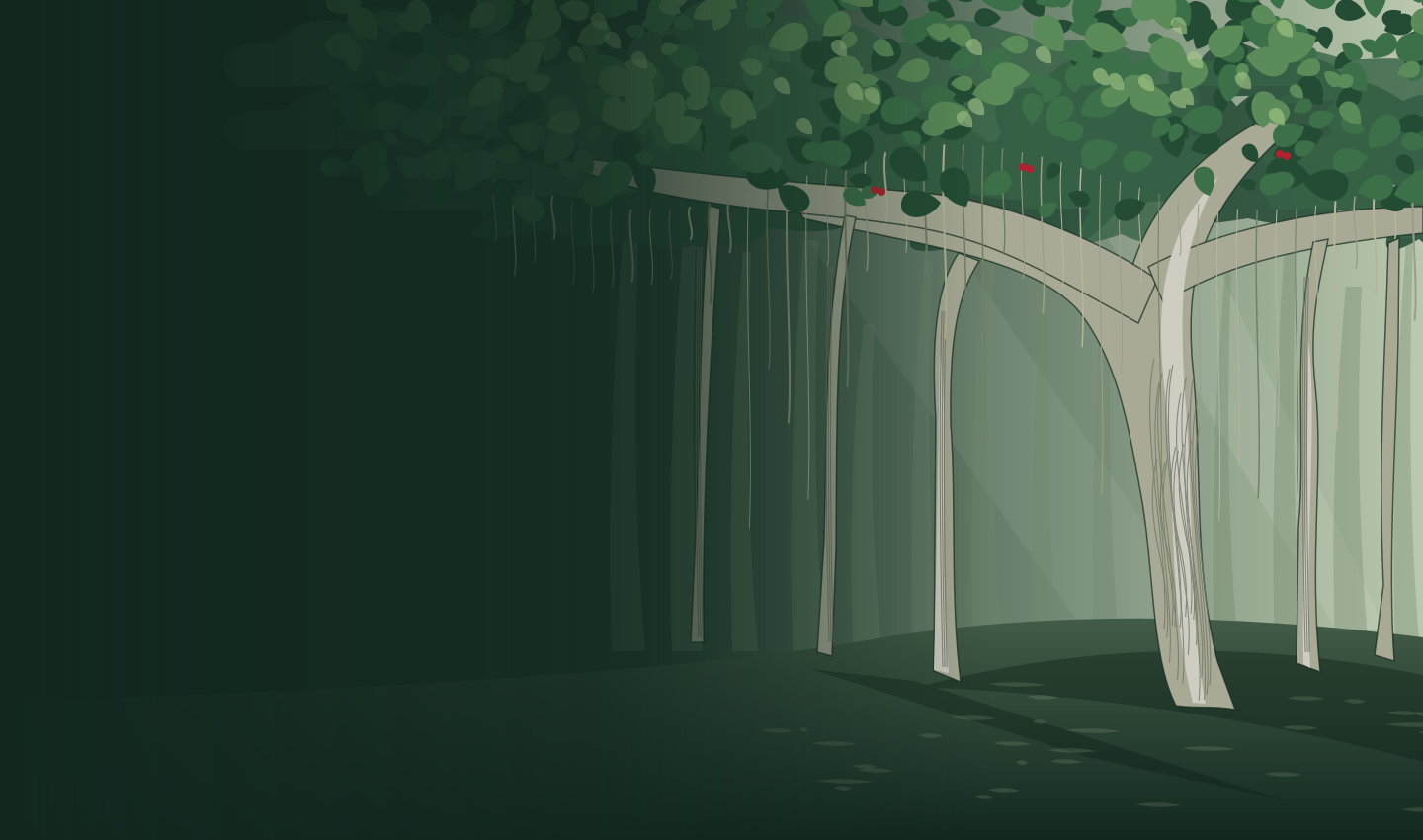
| Indian banyan | Ficus benghalensis |
|---|---|
| Associated pollinator | Eupristina masoni |
| Flower enclosure | Syconium |
| Entrance | Ostiole |
| Different species | F. microcarpa is associated with E. verticillata |
How does pollen reach flowers inside a fig?
A fig is not a conventional flower sitting open to the air. Its small flowers face into an enclosed chamber. A receptive fig has a narrow entrance, the ostiole, through which a suitable female pollinating wasp can enter.
Pollen carried by the wasp reaches flowers inside. Some flowers participate in seed production, while others are used in the wasp’s reproductive cycle. The relationship provides the tree with pollen transport and the insect with a place for its offspring to develop.
The cycle, in sequence
- A female pollinating wasp reaches a receptive fig.
- She enters through the ostiole, carrying pollen.
- She pollinates flowers and lays eggs in suitable flowers.
- The next generation develops within the fig.
- Mating occurs and pollen-carrying females leave to locate receptive figs.
- Ripe figs are eaten by animals that can disperse the tree’s seeds.
This is a simplified explanation of the pollinating association. Not every wasp found around a fig is the pollinator, and the details differ across the genus. It is better to keep the species name than to apply one diagram indiscriminately to every fig.
Why does the wasp species matter?
The named association for F. benghalensis is Eupristina masoni. The 2020 genomic research commonly described as a “banyan and wasp” study instead involved F. microcarpa and E. verticillata. The shared common name can easily hide that change of species.
Pollination is therefore relevant to introduction and naturalisation. A cultivated tree may survive and form figs away from its native range, while successful sexual reproduction depends on the appropriate biological partners. The existence of planted trees is not enough to establish the whole interaction.
Can banyans seed outside their native range?
The sources do not phrase this consistently. The RHS profile says the Indian banyan’s figs are not pollinated outside its native range. Oxford’s account discusses the possibility of invasive spread where the pollinator is present. Those statements should not be merged into a universal geographic rule.
For a specific place, check current species and pollinator records with local botanical or extension authorities. Our regional invasive-status guide separates species and jurisdictions. It does not infer safety from a general statement that banyans need a specialist insect.
Sources
- Plants 400: Ficus benghalensisUniversity of Oxford · Accessed 2026-11-24
- Ficus benghalensisNational Parks Board, Singapore · Accessed 2026-11-24
- Ficus benghalensis: banyanRoyal Horticultural Society · Accessed 2026-11-24
- Genomes offer new insights into fig–wasp symbiotic systemChinese Academy of Sciences · 2020 · Accessed 2026-11-24